
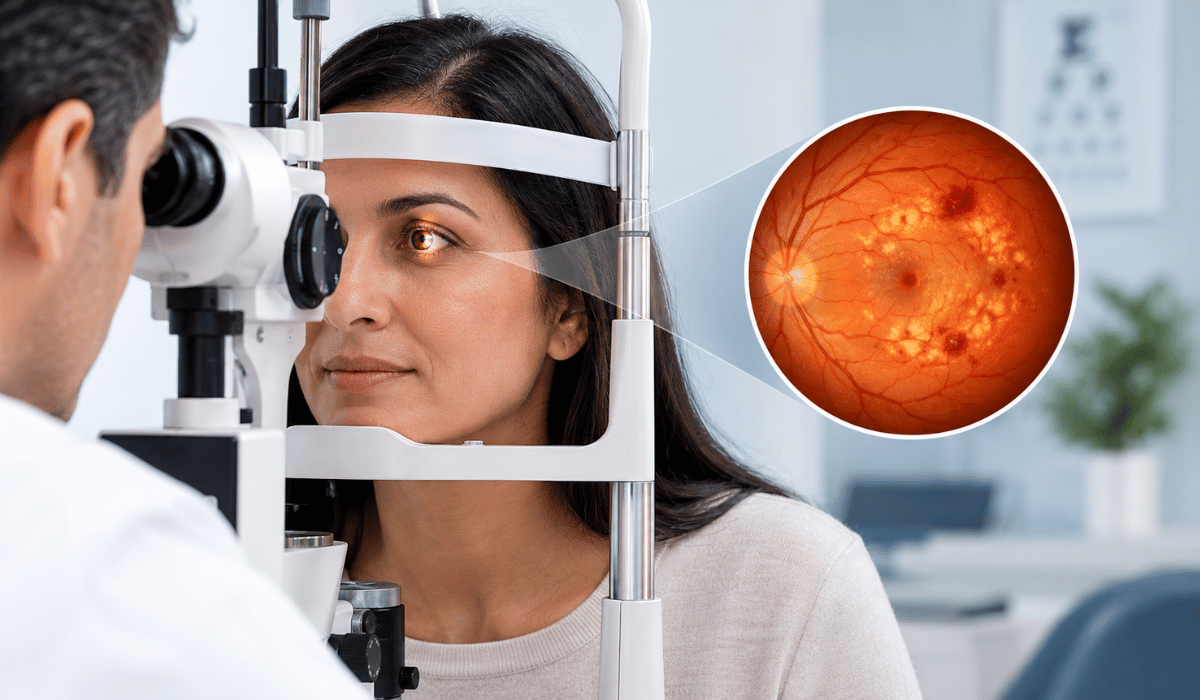
Diabetes affects far more than blood sugar levels. Over time, it can quietly damage the tiny blood vessels inside the eye, leading to a condition called diabetic retinopathy. What makes this condition especially concerning is that it often develops without any noticeable symptoms until significant damage has already occurred. By the time vision changes become obvious, the disease may have progressed well beyond its earliest, most treatable stage.
This article breaks down the diabetic retinopathy symptoms to watch for, how the condition develops, and why a yearly eye exam remains one of the most effective tools for protecting long-term vision.
What Is Diabetic Retinopathy?
Diabetic retinopathy develops when consistently high blood sugar damages the small blood vessels in the retina, the light-sensitive tissue at the back of the eye. These vessels can weaken, leak fluid, or begin growing abnormally as the condition progresses. Left unmanaged, this damage can lead to vision loss and, in advanced cases, blindness.
Both type 1 and type 2 diabetes can lead to diabetic retinopathy, and the risk generally increases the longer a person has lived with diabetes, particularly when blood sugar levels have not been well controlled.
Diabetic Retinopathy Symptoms to Watch For
One of the most important things to understand about diabetic retinopathy is that early stages often produce no symptoms at all. Vision can remain sharp even as damage builds up inside the eye. This is exactly why yearly screening matters so much, since a comprehensive eye exam can detect changes long before a person notices anything different about their vision.
As the condition progresses, however, several signs and symptoms of diabetic retinopathy may start to appear:
- Blurred or fluctuating vision, which can worsen depending on blood sugar levels at the time
- Dark spots or floaters drifting across the field of vision, often caused by small amounts of bleeding inside the eye
- Having trouble seeing at nite or adapting to illumination changes
- Faded or washed-out colors that seem less vivid than they used to
- Patchy or blank areas appearing in the field of vision
- Sudden vision loss, which can occur if bleeding or fluid buildup becomes severe
What are the symptoms of diabetic retinopathy in its earliest form? Often, there aren’t any that a person would notice on their own. This gap between the onset of damage and the appearance of symptoms is what makes the condition so easy to overlook and so important to screen for proactively.
The Stages of Diabetic Retinopathy
Diabetic retinopathy typically develops in stages, and understanding where a person falls on this spectrum helps explain why early detection carries so much weight.
Mild nonproliferative retinopathy involves small areas of swelling in the retina’s blood vessels. At this stage, a person usually has no symptoms at all, and the condition is only visible through a dilated eye exam.
Moderate to severe nonproliferative retinopathy involves more widespread blood vessel damage, which can begin to affect the blood supply to parts of the retina. Symptoms may start to appear at this stage, though they’re often subtle.
Proliferative diabetic retinopathy is the most advanced stage, marked by the growth of new, fragile blood vessels that can bleed into the eye. This stage carries the highest risk of significant vision loss and typically requires more urgent treatment.
Because the progression from one stage to the next isn’t always accompanied by obvious symptoms, relying on how your vision feels day to day isn’t a reliable way to catch the condition early.
Why Yearly Eye Exams Matter
A yearly dilated eye exam allows an eye care provider to look directly at the retina and identify changes long before a person would notice anything on their own. This is the core reason annual screening is recommended for anyone living with diabetes, regardless of how well their vision feels in daily life.
A few reasons this yearly habit matters so much:
- Early detection changes outcomes. Catching retinopathy in its early stages generally makes treatment more effective and vision loss more preventable.
- Diabetic retinopathy progresses silently. Waiting for symptoms to appear often means waiting until the disease has already advanced.
- Blood sugar control can fluctuate. Even people who manage their diabetes carefully can experience periods of elevated blood sugar that increase strain on the eyes, making consistent monitoring valuable regardless of how stable things have felt recently.
- Other diabetes-related complications often move together. Eye exams can sometimes reveal early signs of related issues, giving both the patient and their care team a fuller picture of overall health.
Who Is Most at Risk?
While anyone with diabetes carries some risk of developing diabetic retinopathy, certain factors increase the likelihood of the condition progressing more quickly:
- Diabetes that has gone unmanaged or poorly controlled for an extended period
- High blood pressure alongside diabetes
- High cholesterol
- Pregnancy in women with pre-existing diabetes
- A longer overall duration of living with diabetes
People with any of these additional risk factors may benefit from even closer monitoring than a standard yearly exam, based on guidance from their doctor or eye care provider.
What Happens During a Diabetic Eye Exam
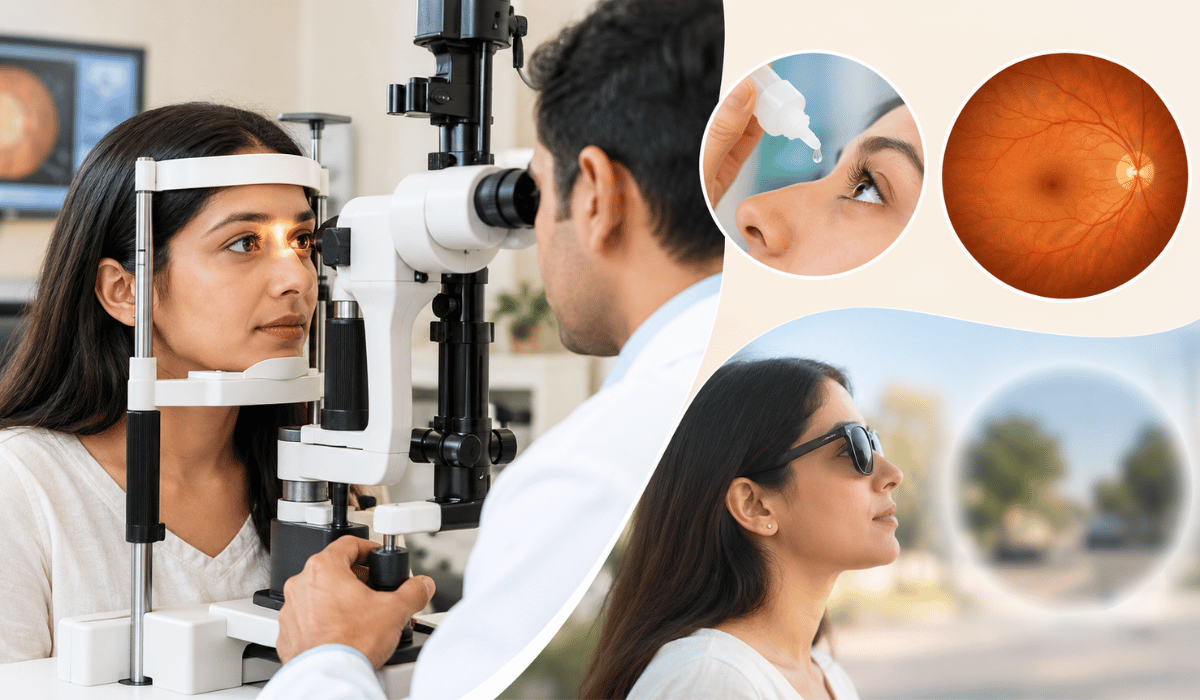
A comprehensive dilated eye exam typically involves administering eye drops that widen the pupil, allowing the provider to get a clear view of the retina and optic nerve. The exam is usually quick and painless, though vision may feel blurry for a few hours afterward as the dilation wears off.
During the exam, the provider looks specifically for signs of blood vessel damage, swelling, or abnormal vessel growth. If the exam finds any of these, the provider can start monitoring or treatment well before symptoms would have otherwise prompted a visit.
This type of screening can be performed by either an optometrist or an ophthalmologist, and the two roles are often confused. If you’re not sure which type of provider you need for a diabetic eye exam, this guide on optometrist vs. ophthalmologist care breaks down the difference and helps clarify who to see for routine screening versus more advanced treatment.
Diabetic Retinopathy vs. Other Diabetes-Related Eye Problems
Diabetic retinopathy is the most common diabetes-related eye condition, but it isn’t the only one. People with diabetes also face a higher risk of developing diabetic macular edema, a related condition where fluid builds up in the macula, the part of the retina responsible for sharp, central vision. Diabetes also raises the risk of cataracts and glaucoma, both of which can develop alongside or independently of retinopathy.
Because these conditions can overlap and sometimes share similar early symptoms, a comprehensive eye exam is valuable for more than just retinopathy alone. An eye care provider can distinguish between these conditions and recommend the right course of monitoring or treatment for each one.
What Treatment Options Look Like
Treatment for diabetic retinopathy depends heavily on how advanced the condition has become at the time it’s caught. In its earliest stages, treatment often focuses on managing the underlying diabetes more closely, since better blood sugar, blood pressure, and cholesterol control can slow or stabilize the damage.
As the condition progresses, an eye care specialist may recommend more targeted treatments, which can include injections to reduce swelling and abnormal vessel growth, laser treatment to seal leaking blood vessels, or, in more advanced cases, a surgical procedure to address bleeding inside the eye. The specific approach depends on which stage of the condition a person is in and how much of the retina has been affected. More advanced retinopathy typically requires a referral to a specialist, and patients can learn more about the specialty clinics available for this kind of coordinated, condition-specific care.
This is another reason early detection carries so much weight. Catching the condition earlier tends to make treatment simpler, less invasive, and more effective, which brings the conversation back to the value of a yearly exam rather than waiting for symptoms to force the issue.
Managing Diabetes to Protect Your Vision
While yearly eye exams are essential for catching diabetic retinopathy early, day-to-day diabetes management plays a major role in reducing risk in the first place. Keeping blood sugar levels within a healthy range, managing blood pressure and cholesterol, and attending regular checkups with a primary care provider all contribute to protecting eye health over time. Since diabetes management typically requires ongoing coordination between a primary care provider and other specialists, having a consistent relationship with one doctor makes it easier to catch complications like retinopathy before they progress.
How IAMACF Supports Eye Health for People with Diabetes
IAMACF operates a free clinic in Chicago, providing care to individuals who are uninsured or underserved, including many who are managing diabetes without consistent access to monitoring or specialist referrals. Routine lab testing plays an important role in this kind of care, since tracking blood sugar levels over time helps both patients and providers understand how well diabetes is being managed and how much risk exists for complications like retinopathy.
For patients who need more specialized attention, IAMACF can help connect them with appropriate specialty care rather than leaving diabetes-related eye concerns unaddressed because of cost. Those who need affordable healthcare can learn more about IAMACF’s services and how to get started.
Final Thoughts
Diabetic retinopathy is one of the clearest examples of why routine screening matters more than waiting for symptoms. The condition can progress for years without any change in how a person’s vision feels, which means a yearly dilated eye exam often catches damage long before it becomes noticeable on its own. Pairing that yearly exam with steady blood sugar management gives people living with diabetes the best chance of protecting their vision over the long run. If it has been a while since your last eye exam, it’s worth scheduling one soon rather than waiting for a symptom to prompt the visit.
Frequently Asked Questions
What signs of diabetic retinopathy appear first?
Early-stage diabetic retinopathy rarely announces itself through vision changes. Because of that gap, an eye care provider typically has to look for the damage directly with a dilated exam, rather than waiting for a patient to notice something is off.
Can diabetic retinopathy be reversed?
Better blood sugar control can sometimes stabilize or slow early damage, but it generally can’t reverse more advanced damage, which is why early detection matters so much.
Does good blood sugar control prevent diabetic retinopathy entirely?
Good control significantly reduces the risk and slows progression, but it doesn’t guarantee that retinopathy will never develop, especially with a longer duration of diabetes.
Is diabetic retinopathy the same in type 1 and type 2 diabetes?
Both types can lead to diabetic retinopathy, though the timeline can differ. People with type 1 diabetes often go several years after diagnosis before developing it, while people with type 2 diabetes may already carry some damage by the time doctors diagnose them.
What happens if diabetic retinopathy is left untreated?
In the absence of therapy or monitoring, the illness may worsen to a point where there is a considerable chance of irreversible vision loss.