

Have you been feeling unusually nervous, sweating more than normal, or losing weight without trying? These are some of the most common hyperthyroidism symptoms — and many people do not even know that their thyroid gland could be the reason behind them.
At IAMACF (IAMA Charitable Foundation Community Health Clinic) in Chicago, we see patients every week who have been living with these symptoms for months before finally getting answers. If you are uninsured or underinsured and have been putting off a doctor’s visit, this article is for you. We want to help you understand what hyperthyroidism is, what signs to look for, why it happens, and how we can help you right here in Chicago — completely free of charge.
What Is Hyperthyroidism?
Your thyroid is a small, butterfly-shaped gland that sits at the front of your neck. Even though it is small, it does a very big job. It produces hormones that control how fast or slow almost everything works in your body — your heart rate, your metabolism, your body temperature, even your mood.
When the thyroid produces too much of these hormones, the body essentially goes into overdrive. This condition is called hyperthyroidism, or an overactive thyroid. Think of it like a car engine running at too high a speed for too long — eventually, things start to wear down.
Hyperthyroidism is more common than many people think. It affects about 1 in 100 people in the United States, and women are diagnosed more often than men. The good news is that with the right care and treatment, it is very manageable.
Common Hyperthyroidism Symptoms to Watch For
One of the tricky things about hyperthyroidism symptoms is that they can look like signs of many other health problems. Some people think they are just stressed, not sleeping well, or getting older. But if you notice several of these signs together, it is worth getting checked.
Physical Symptoms
Unintended weight loss is one of the most telling hyperthyroidism symptoms. Even if your appetite has increased and you are eating more than usual, the weight keeps dropping. This happens because your metabolism is running too fast.
A racing or irregular heartbeat is another major sign. You may notice your heart pounding even when you are sitting still or resting. Some people describe it as their heart “skipping” or fluttering. Doctors call this palpitations.
Trembling hands – a fine, slight shake in your fingers or hands – is also very typical. It may be subtle at first, but you might notice it when you try to hold a cup or write something.
Feeling too hot all the time and sweating more than usual, even in cool weather or with little activity, is another sign that your body’s temperature regulation is off.
Fatigue and muscle weakness, especially in your upper arms and thighs, can make everyday tasks feel harder than they should.
Changes in your bowel habits, such as having more frequent bowel movements or loose stools, can also be linked to an overactive thyroid.
Changes in your menstrual cycle in women — lighter periods, less frequent periods, or periods stopping altogether — can be caused by thyroid hormone imbalance.
Mental and Emotional Symptoms
Hyperthyroidism symptoms are not only physical. Many people feel the effects emotionally and mentally as well.
Anxiety, nervousness, or feeling on edge for no obvious reason is very common. You might feel restless or irritable more than usual.
Difficulty sleeping or insomnia — even when you are exhausted, your mind and body feel too “wired” to settle down.
Difficulty concentrating and feeling scattered or forgetful can affect your work and daily life.
A Visible Sign: Goitre
In some cases, the thyroid gland itself swells up. This creates a visible lump or fullness at the base of your neck, known as a goitre. Not everyone with hyperthyroidism develops a goitre, but when it is present, it is a clear sign that something is going on with your thyroid.
What Causes Hyperthyroidism?
Understanding the cause of your overactive thyroid helps your doctor choose the right treatment path. There are several reasons why the thyroid might produce too much hormone.
Graves’ Disease
The most common cause of hyperthyroidism is an autoimmune condition called Graves’ disease. In autoimmune conditions, your immune system — which normally protects you from illness — mistakenly attacks your own body. With Graves’ disease, the immune system sends signals that cause the thyroid to produce far more hormones than the body needs. This condition tends to run in families, and it is more commonly seen in women between the ages of 20 and 40.
Thyroid Nodules
Sometimes small lumps called nodules develop on the thyroid gland. Some of these nodules become “toxic” — meaning they start producing thyroid hormone on their own, independently of what the body actually needs. When multiple nodules do this together, it is called toxic multinodular goitre.
Too Much Iodine
The thyroid uses iodine to make its hormones. If a person takes in too much iodine — through certain medications, supplements, or a diet very high in iodine-rich foods like seaweed — the thyroid can go into overdrive.
Thyroiditis
Sometimes the thyroid becomes inflamed, often after a viral illness or due to an autoimmune reaction. When this happens, the gland can temporarily release stored hormones into the blood, causing a short-lived but sometimes intense episode of hyperthyroidism symptoms.
Too Much Thyroid Medication
People who take thyroid hormone replacement for hypothyroidism (an underactive thyroid) can sometimes develop hyperthyroidism if the dose is too high. This is why regular check-ups and blood tests are important for anyone on thyroid medication.
How Is Hyperthyroidism Diagnosed?
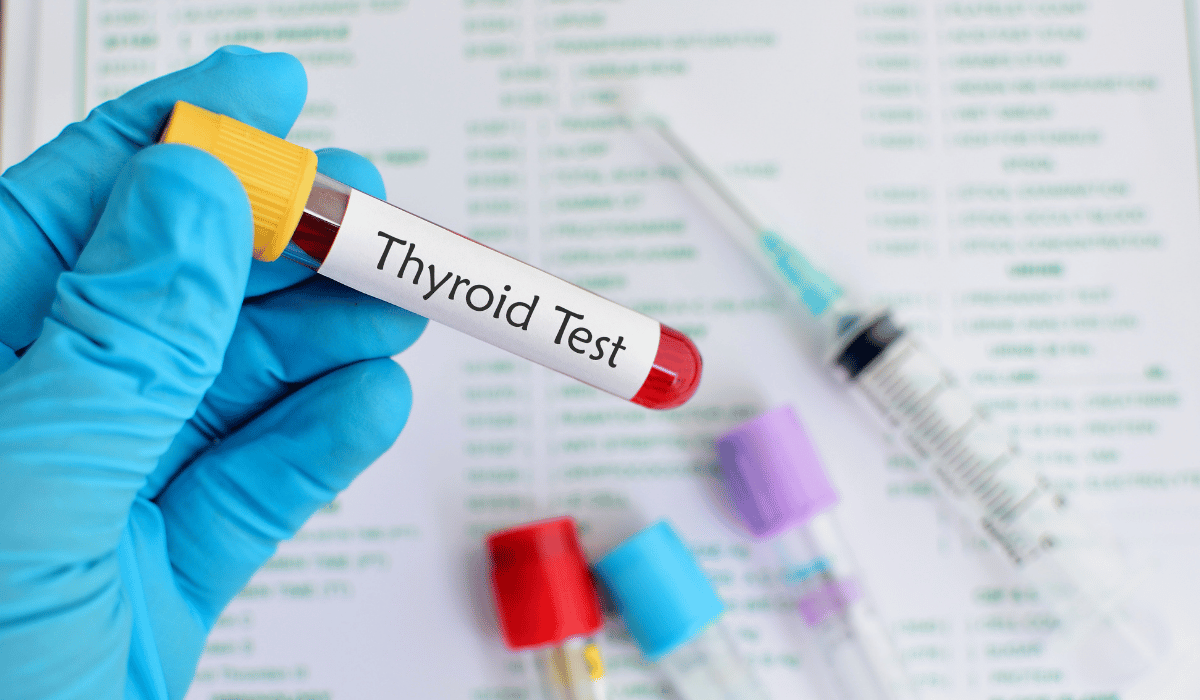
If your doctor suspects hyperthyroidism based on your symptoms and physical exam, the next step is a simple blood test.
At IAMACF, we offer free lab services that include thyroid function testing. The most important tests are the following:
- TSH (Thyroid Stimulating Hormone): This is typically the first test ordered. A low TSH level suggests that your thyroid is overactive.
- T3 and T4 levels: These measure the actual thyroid hormones in your blood. High levels confirm hyperthyroidism.
Depending on the results, your doctor may also refer you for an ultrasound of the thyroid or a thyroid scan to get a clearer picture of what is going on.
All of this can be started right here at our clinic.
Treatment Options for Hyperthyroidism
The good news is that hyperthyroidism is very treatable. There are several approaches, and the right one depends on your specific situation — the cause, your age, how severe your symptoms are, and other health factors.
Medications
The most common first step is medication. Antithyroid drugs work by telling the thyroid to slow down hormone production. These medications are typically taken daily, and most people begin to feel better within a few weeks of starting treatment.
At IAMACF, our team works to connect patients with free or low-cost medications through our medication programme. We understand that the cost of prescriptions is a real barrier for many people without insurance, and we do everything we can to make sure cost is not standing between you and the care you need.
A second type of medication often used alongside antithyroid drugs is beta-blockers. These do not directly treat the thyroid, but they quickly ease many of the uncomfortable symptoms — the racing heart, the trembling hands, the anxiety — while the antithyroid medication does its slower work.
Radioactive Iodine Therapy
This is a common long-term treatment for hyperthyroidism. A small, safe dose of radioactive iodine is taken by mouth. Because the thyroid absorbs iodine naturally, it takes in the radioactive form, and the overactive thyroid cells are gradually destroyed. This treatment is effective and widely used, though it often leads to hypothyroidism (underactive thyroid) over time, which then requires thyroid hormone replacement.
Surgery
In some cases — such as when the thyroid is very large, when nodules are present, or when other treatments are not suitable — part or all of the thyroid gland may need to be surgically removed. This is called a thyroidectomy. Our team can help coordinate referrals for speciality care when needed.
How IAMACF Can Help You
We know that not having health insurance should not mean not getting healthcare. That is exactly why IAMACF exists.
At our free community health clinic in Chicago, located at 2645 W Peterson Ave, we provide care to uninsured and underinsured patients at absolutely no cost. When you come in with hyperthyroidism symptoms — or any health concern — here is what you can expect:
- A warm and respectful welcome from our team
- An initial visit with a supervised medical student, followed by evaluation from an attending physician
- Blood tests and lab work through our free lab services
- Prescription support through our medications program
- Referrals to speciality clinics when your care requires a specialist
Our clinic is open Tuesday through Thursday from 10 AM to 4 PM, Friday from 5 to 9 PM, and Saturday through Sunday from 10 AM to 2 PM. Patient registration takes place during the first 30 minutes of each session.
You do not need to have insurance. You do not need to speak perfect English — we have translators available. You just need to show up.
Do Not Ignore the Signs
Hyperthyroidism symptoms can start small and gradually become harder to ignore. A racing heart that you brush off as nerves. Weight loss, you chalk up to stress. Shaky hands, you assume, are just part of ageing. But left untreated, an overactive thyroid can put real strain on your heart and bones over time and can lead to more serious complications.
Getting a simple blood test can give you clear answers. From there, our team will work with you — in plain language, with patience — to build a plan that makes sense for your life.
If you or someone you love has been experiencing any of the symptoms described in this article, we encourage you to come in and see us. Thyroid conditions are highly manageable with the right care, and you do not have to figure it out alone.
Call us at (872) 330-3627 to schedule your appointment, or visit us at 2645 W Peterson Ave, Chicago, Illinois 60659.
We are here for you because everyone deserves good health, no matter what.
FAQ’s
Can hyperthyroidism go away on its own?
In some cases, hyperthyroidism caused by temporary thyroid inflammation (thyroiditis) may improve on its own. However, most cases, especially those caused by Graves’ disease or thyroid nodules, require medical evaluation and treatment.
What causes hyperthyroidism?
Common causes of hyperthyroidism include Graves’ disease, toxic thyroid nodules, excessive iodine intake, thyroiditis, and taking too much thyroid hormone medication. A healthcare provider can determine the exact cause through testing.
How is hyperthyroidism diagnosed?
Hyperthyroidism is usually diagnosed through blood tests that measure thyroid hormone levels, including TSH, T3, and T4. Additional tests such as a thyroid ultrasound or thyroid scan may be recommended if needed.
Is hyperthyroidism a serious condition?
Yes. If left untreated, hyperthyroidism can lead to serious complications such as heart rhythm problems, osteoporosis, muscle weakness, and a potentially life-threatening condition called thyroid storm. Early diagnosis and treatment are important.
Can hyperthyroidism cause anxiety and panic attacks?
Yes. Excess thyroid hormone can overstimulate the nervous system, leading to anxiety, nervousness, irritability, restlessness, and even panic attack-like symptoms in some people.
Does hyperthyroidism always cause weight loss?
Weight loss is a common symptom of hyperthyroidism because the body’s metabolism speeds up. However, not everyone loses weight, and some people may maintain or even gain weight depending on their appetite and overall health.
What foods should people with hyperthyroidism avoid?
People with hyperthyroidism may be advised to limit foods and supplements that are very high in iodine, such as seaweed, kelp, and certain iodine-containing supplements. Always consult a healthcare provider before making major dietary changes.